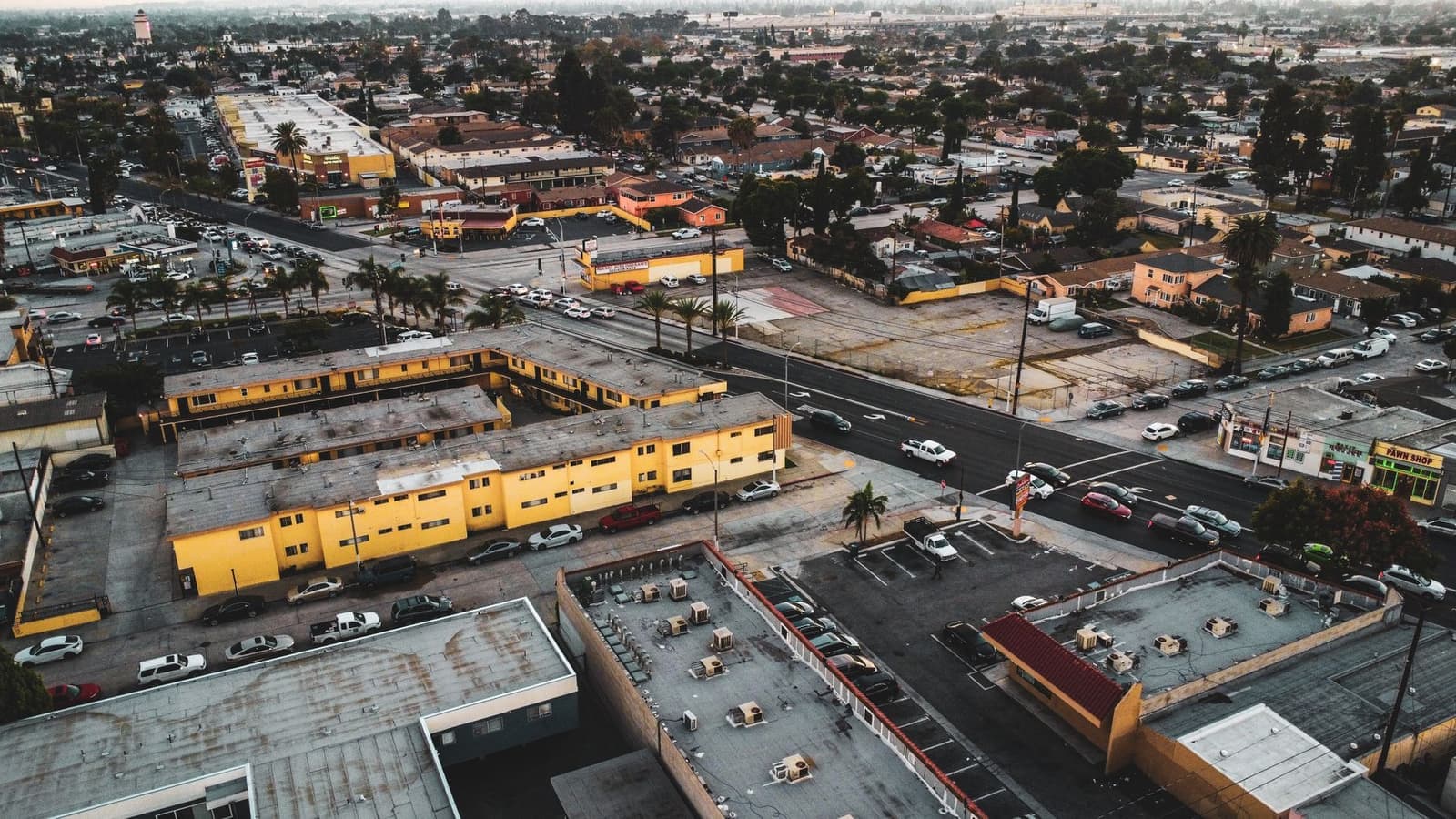
A shop, an office or a small multi-unit building has a roof with more on it than a house does. There are rooftop units, curbs, drains, vents and often several tenants who cannot close.

Photo by Alex Reynolds on Unsplash
Systems for small commercial roofs
Most small commercial buildings in Los Angeles County have low-slope roofs, so the choices are the membranes used on flat roofs: TPO, PVC, modified bitumen and built-up roofing. Coatings can extend a sound existing roof. Some buildings have steep sections with tile, metal or shingle on frontages or parapets.
The building type and the roof use narrow the list. A roof that carries equipment and foot traffic wants a tougher surface or walkway pads. A roof with ponding wants drainage corrected before a membrane is chosen.
A good bid names the system, the insulation, the fastening method and the warranty terms the maker offers, as a document to read, not a promise from us.
Code history matters on older commercial buildings. A roof built decades ago may have been permitted under rules that no longer apply, so the building office's records for the address are worth requesting before design starts.
Rooftop units, curbs and drains
The equipment sits on curbs that must be flashed to the new membrane. Plan the sequence: disconnect and lift the units if they must move, reflash the curbs, set them back and test.
Coordinate with whoever services the air conditioning, since air conditioning shut-downs are the thing tenants notice. Drains and scuppers need to be cleared, repaired or replaced, and the slope toward them confirmed. Pipes, conduit and vents get their own flashing.
A written scope should name every curb, drain and penetration, and say who disconnects the equipment. Unnamed items become change orders.
Roof access and fall protection are part of the schedule. A building with no permanent ladder or hatch needs temporary access, and that is a line item, not a surprise.
What a commercial scope should name
- Roof system, insulation and fastening method
- Every rooftop unit, curb, drain and penetration
- Who disconnects and reconnects equipment
- Phasing by section and tenant protection
- Cool roof path and the evidence the permit wants
- Permit and the final inspection that closes it
Signs a commercial roof is due
- Ponding at drains or around equipment
- Ceiling stains in more than one unit
- Open seams or splits along curbs and parapets
- A lender or insurer asking about roof condition
The nonresidential cool roof rule
For nonresidential buildings, the City of Los Angeles express permit follows the state Energy Code rather than the residential cool roof ordinance. The state rule applies to roof replacements, with values set by slope and climate zone.
The details differ from single-family housing, and the exceptions differ too. Ask the building department which compliance path your permit uses and what documentation it expects. A CRRC listing for the membrane is the usual evidence.
Roofing while tenants stay open
Work can be phased by section so entrances, loading areas and quiet hours are protected.
Weather matters. A low-slope roof is opened and closed in sections each day, with the membrane tied in at the end of every work period.
Tell us about leases, quiet hours, deliveries and any tenant with sensitive equipment. Those facts shape the sequence more than the roof does.
Tenant communication is the other half. A short notice that names the work dates, the noisy stages and a contact for questions prevents most complaints. The scope should say who sends it.
Commercial roof questions
Who are some reputable commercial roofing contractors in Los Angeles?
Whoever you hire, get a written scope listing each curb, drain and penetration, and compare bids for the same system.
What roof systems do small commercial buildings use?
Mostly low-slope membranes: TPO, PVC, modified bitumen and built-up roofing. Coatings can renew a sound roof. Steep sections use tile, metal or shingle. The choice depends on equipment, foot traffic, drainage and the deck.
Must a commercial reroof meet the cool roof rule?
Nonresidential roofs follow the state Energy Code, with values by slope and climate zone. The City of Los Angeles permit points to that code. Ask your building department which compliance path applies and which documents it wants.
In a reroof, what is done with rooftop units, curbs and drains?
Units are disconnected or lifted, curbs are reflashed to the new membrane, and drains are cleared, repaired or replaced. The scope should name each curb and drain and say who disconnects the equipment.
Can the roof be replaced while tenants stay open?
Usually, in phases. The roof is opened in sections, closed at the end of each work period, and work near entrances and loading areas is scheduled around business hours. Share lease terms and quiet hours with us early.