On a permit, reroof is the word for replacing the covering on an existing building. In practice it covers two very different jobs: a tear-off, where every old layer is removed, and an overlay, where one new layer goes over one old one.
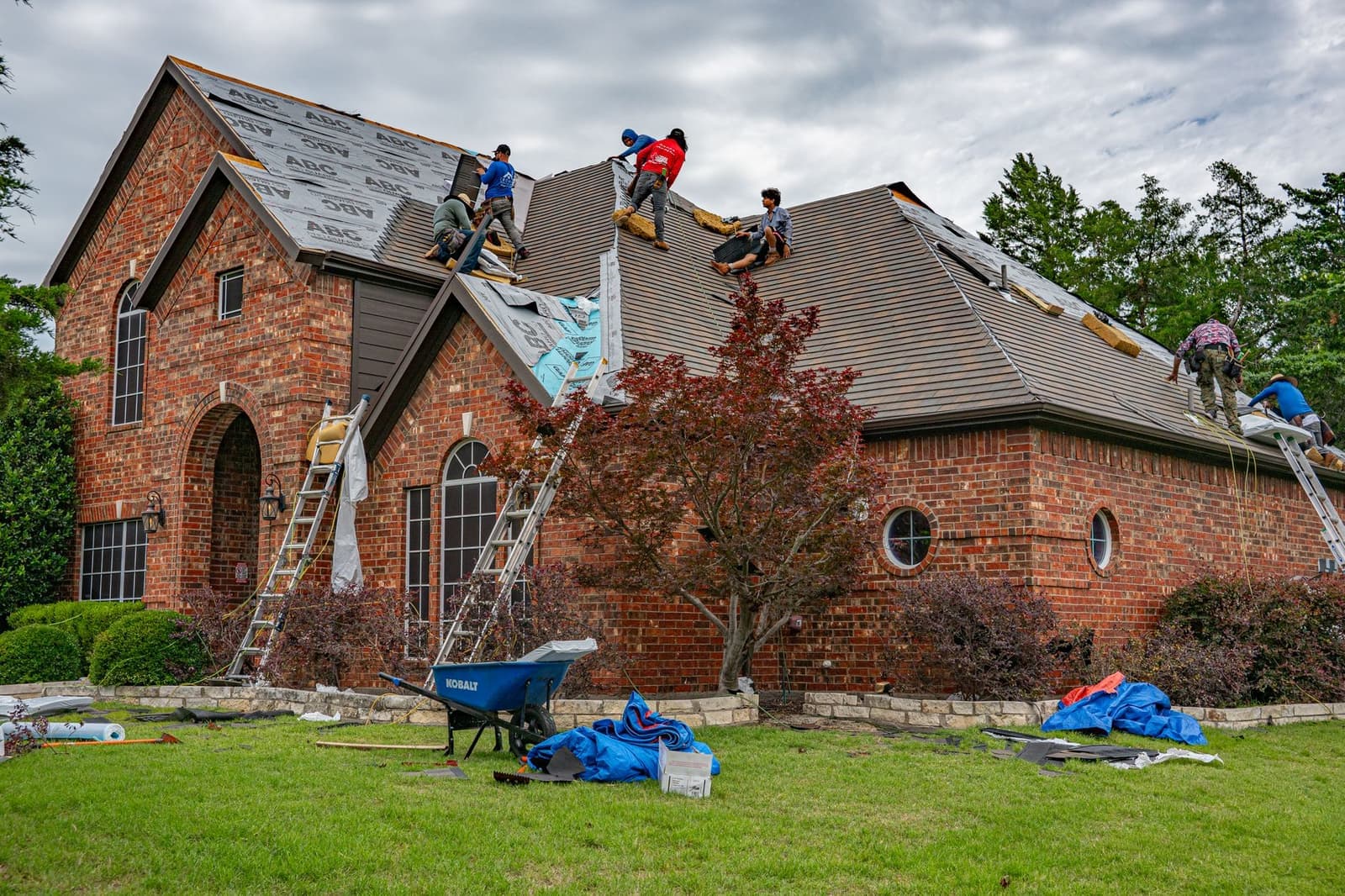
What a tear-off removes, and why it comes first
A tear-off strips the covering, the underlayment and any older layers beneath, back to the bare deck. The reason is simple: you cannot judge a surface you cannot see. Overlaying hides the deck, the flashing and the nail pattern. Stripping exposes all of it.
The work is done slope by slope so that no more roof is open than can be closed in before dark. Debris is lowered or chuted to a bin, nails are swept up with a magnet, and the deck is walked for soft or loose areas. Only then does anyone know what the replacement scope really is.
That is why a tear-off bid should carry a deck allowance: a unit price for replacing bad boards, so a surprise under the old layers changes the total by a known amount and not by an argument.
Overlay or tear-off: where the line falls
Where the County is the building authority, an overlay is the exception and comes with conditions. Only one layer can already be on the roof. The framing must carry the extra weight. The deck has to be sound and dry. Clay or concrete tile always comes off before a reroof, and existing wood shakes have to come off as well.
Wood shake and wood shingle roof covering is prohibited by the City of Los Angeles, though a modification request can approve a repair of up to 5 percent. Choosing an overlay does not avoid the Energy Code, because the state cool roof rule counts an overlay as replacement.
An overlay hides deck problems and may narrow what a manufacturer warranty covers. For an older roof that has already had one layer added, tear-off is the usual answer, because the County's one-layer limit is already used up.
What a tear-off scope should name
- Number of existing layers and how each is removed
- Deck allowance per board or sheet
- Closing of gapped boards where present
- Protection plan for the house, yard and drive
- Each open section closed in by end of day
- Permit, inspection and certificate
Signs a tear-off beats an overlay
- A previous layer is already on the roof
- Tile or wood shake covers the deck now
- The roof deck feels soft or bounces underfoot
- Leaks keep coming back after earlier work

Photo by Raze Solar on Unsplash
What a tear-off finds under an older house
Census Bureau estimates (ACS 2020-2024) give 1965 as the median year built for Los Angeles County houses. A tear-off can turn up gapped boards, sometimes with a wood shake layer under the shingles. Dry rot shows up along eaves, around chimneys and below failed flashing. Vents may be undersized or missing, leaving the attic to trap heat.
Each finding changes the scope in a specific way. Gapped boards get closed with plywood or OSB sheets. Rotted boards are cut out and replaced. Vents are added or enlarged so intake low and exhaust high are balanced. The older homes page covers these in more depth.
Some older roofing materials may also need testing before they are disturbed. Ask about testing at the assessment, before anything comes off.
How the days run, and the permit
A typical tear-off follows a plain order. Day one protects the property: tarps over landscaping, plywood on fragile surfaces, a bin placed where it will not crack a driveway. Old roofing comes off one section at a time. Deck repairs follow, then underlayment, drip edge and flashing, so each section is closed in before the next opens.
The covering and ridge go on next, then a magnet sweep of the yard and the driveway. The inspector visits last.
The permit is a reroof permit. Inside the City, LADBS issues it as an express permit, and the job closes with the Re-roofing Certificate of Compliance, signed by the contractor or owner-builder. Elsewhere, the city's building department or the County issues it. No reroof should start without one, because the final inspection is what closes the job.
Tear-off questions
Can a County reroof go over the old covering, or must it all come off?
Under County rules, only on a roof with a single existing layer, framing that can carry more weight and a dry, sound deck. Tile and wood shake come off first. Two layers already, or a wet deck, means a tear-off.
Why must every tile be stripped before a reroof?
The County requires every clay or concrete tile to come off before a reroof, whatever goes on next. Tile is heavy, hides the deck and cannot carry another covering as a base. Removing it also lets the underlayment, which is what usually fails, be replaced.
How are the house and yard protected during a tear-off?
The plan should be written into the scope: covers over plants and fixtures, protection on surfaces below the eaves, a bin placed on boards, and a magnet sweep at the end for nails. Ask who is responsible for each item before work starts.
What is a re-roofing certificate of compliance?
Inside the City of Los Angeles, it is a signed form: the Re-roofing Certificate of Compliance, which the contractor or owner-builder completes. It confirms the work meets the code items on the permit, and it goes back to the inspector or by mail to the building department.
What if it rains in the middle of a tear-off?
A sound plan avoids opening more roof than can be closed in during the working day. If rain is forecast, the work waits or the open sections are covered. Los Angeles gets most of its rain from November to March, so schedule a tear-off outside that window when you can.