A low-slope roof is a stack built on the deck: a base or insulation layer, sometimes a cover board, then the membrane and the edge metal that closes it. A replacement starts by counting what is already up there, because the layer limit decides whether the old roof can stay or has to come off.
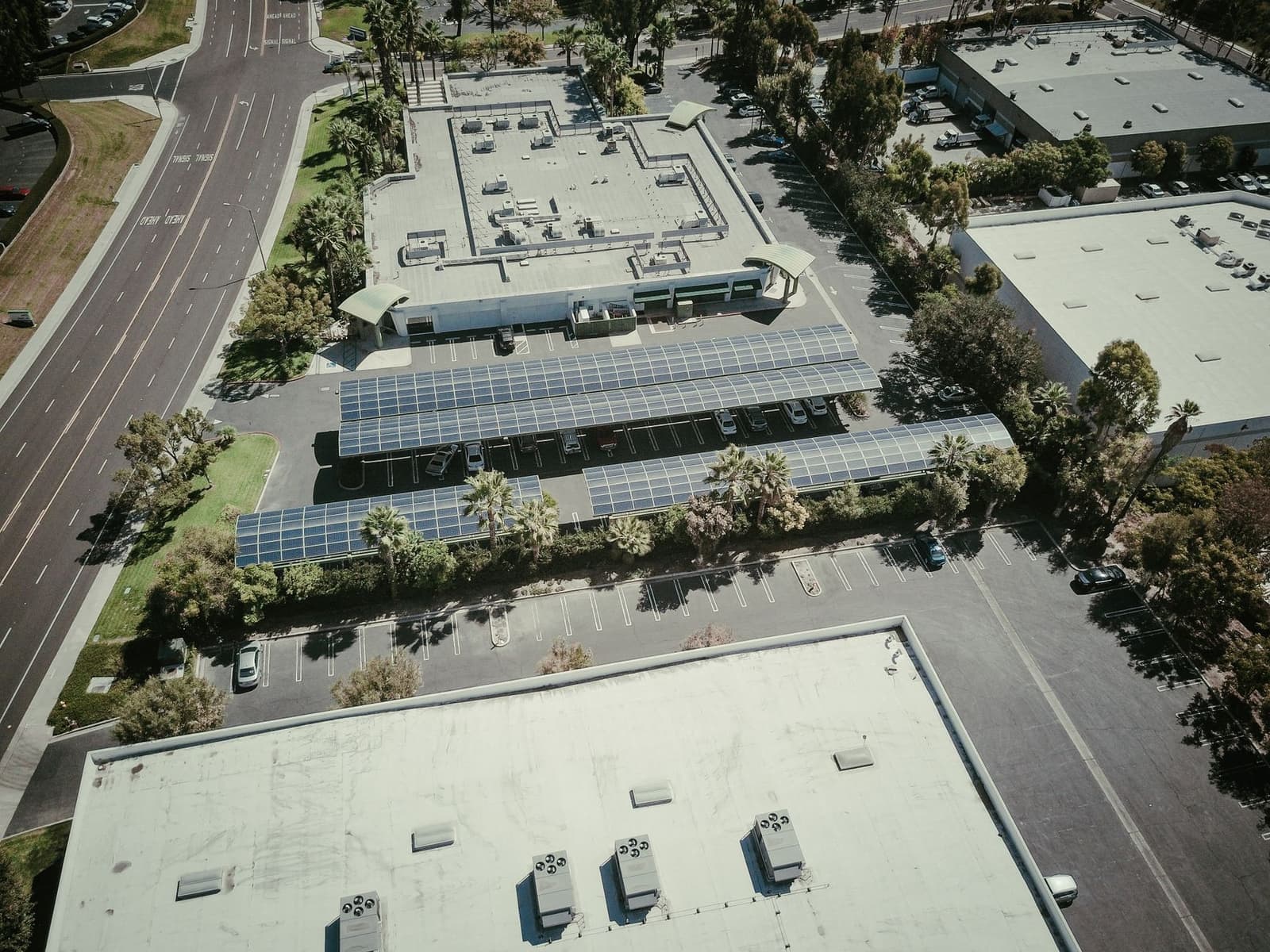
What goes on a low-slope deck
The usual stack, from the deck up, is a base or insulation layer, a cover board where the system calls for one, the membrane, and the edge metal and flashing that close it at the perimeter, walls and penetrations.
The membrane is the choice that matters most. TPO and PVC are single-ply sheets, welded at the seams with hot air. Modified bitumen comes in rolls and is joined by heat or by cold adhesive. Built-up roofing layers felts and bitumen on site. Liquid-applied coatings can renew a sound roof surface, and the City of Los Angeles lists an approved coating on an existing roof as an express permit item.
Each system suits a different building. Ask us to say why one membrane fits the deck, the foot traffic and the drainage, not only which one is cheapest.
The one-layer limit
County rules allow an overlay only on a roof with a single existing layer, framing that can carry the weight and a deck that is sound and dry. A flat roof with more than one existing layer, or a wet deck, is a tear-off.
The practical test is moisture. Old membranes trap water in the insulation below, and a deck that has been wet for years loses strength. An assessment on a low-slope roof should include a read on the insulation and the deck before anyone prices an overlay.
Overlays count as replacement for the Energy Code threshold, so recovering a flat roof does not avoid the cool roof rule.
What a flat roof scope should name
- Membrane type and thickness, with the seam method
- Insulation or cover board under the membrane
- Treatment of every drain, scupper and penetration
- Layers to be removed and deck repairs allowed for
- Cool roof values and the CRRC listing
- Open-flame methods, named or ruled out
Signs a low-slope roof is finished
- Water that pools in the same places and stays for days
- Blisters, splits or open seams in the membrane
- Soft or spongy areas when walked on
- Stains on the ceiling below the low section
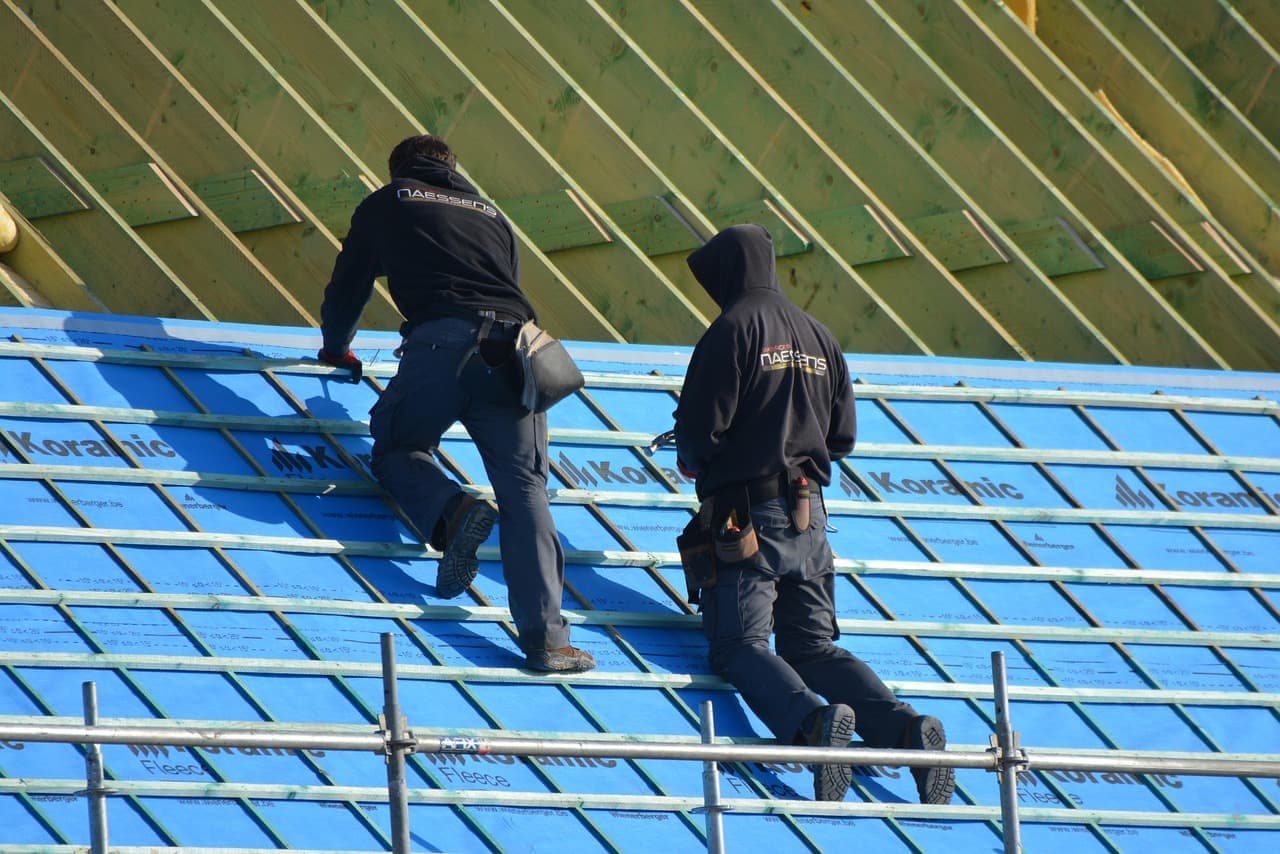
Cool roof values for low slopes
The state values for low-slope reroofs are higher than for steep ones. Across zone 4 and zones 6 to 15, a low-slope reroof must reach 0.63 aged reflectance and 0.75 emittance, or SRI 75 instead, and an insulation trade-off table gives another path in some cases.
The City of Los Angeles asks for aged reflectance of 0.65 and emittance of 0.85, or an SRI of 78, on low slopes (LADWP, 2022). White membranes are the normal way to reach these numbers, and a CRRC listing shows the aged values.
The rule starts once a job passes half the roof. On a single-family house, anything smaller is outside it.
Drains, seams and the open-flame question
A flat roof is only as good as its drainage. Drains, scuppers and the slope built into the insulation decide where water sits. Standing water over several days is a design problem, not weather.
Torch-down is a modified bitumen method that uses an open flame. No fact we hold says it is banned. Open flame on a roof is a fire-safety matter, and cities and insurers treat it differently, so ask your building department and your insurer before choosing it. Cold-applied and heat-welded systems avoid the flame.
Seams and penetrations fail first. The scope should name the flashing at every wall, drain and vent.
Flat roof questions
Can you reroof over an existing flat roof?
Under County rules, only on a roof with one layer or none, framing that can take the load and a dry, sound deck. Two layers or a wet deck mean tear-off. An overlay still counts as a replacement for the cool roof rule.
Is torch down roofing illegal?
No fact we hold says it is banned. Torch-down uses an open flame, which cities and insurers handle differently. Ask your building department and your insurer, and ask us whether a cold-applied or heat-welded system would do the same job.
Which membrane suits my roof: TPO, PVC or modified bitumen?
TPO and PVC are welded single-ply sheets in light colors, which makes cool roof values easier to reach. Modified bitumen is tougher underfoot and joined by heat or adhesive. The deck, foot traffic and drainage decide, so ask us to explain the match.
How does the one-layer limit work on a flat roof?
An overlay is allowed only when no more than one layer is present and the deck is sound. More layers, or a wet deck, mean everything comes off before the new system goes on.
Does a low-slope reroof need cool roof values?
Yes, where the state rule applies. In zones 4 and 6 through 15, low-slope reroofs of more than half the roof need aged reflectance of 0.63 with emittance at 0.75, or else SRI 75. Los Angeles asks for higher values still.