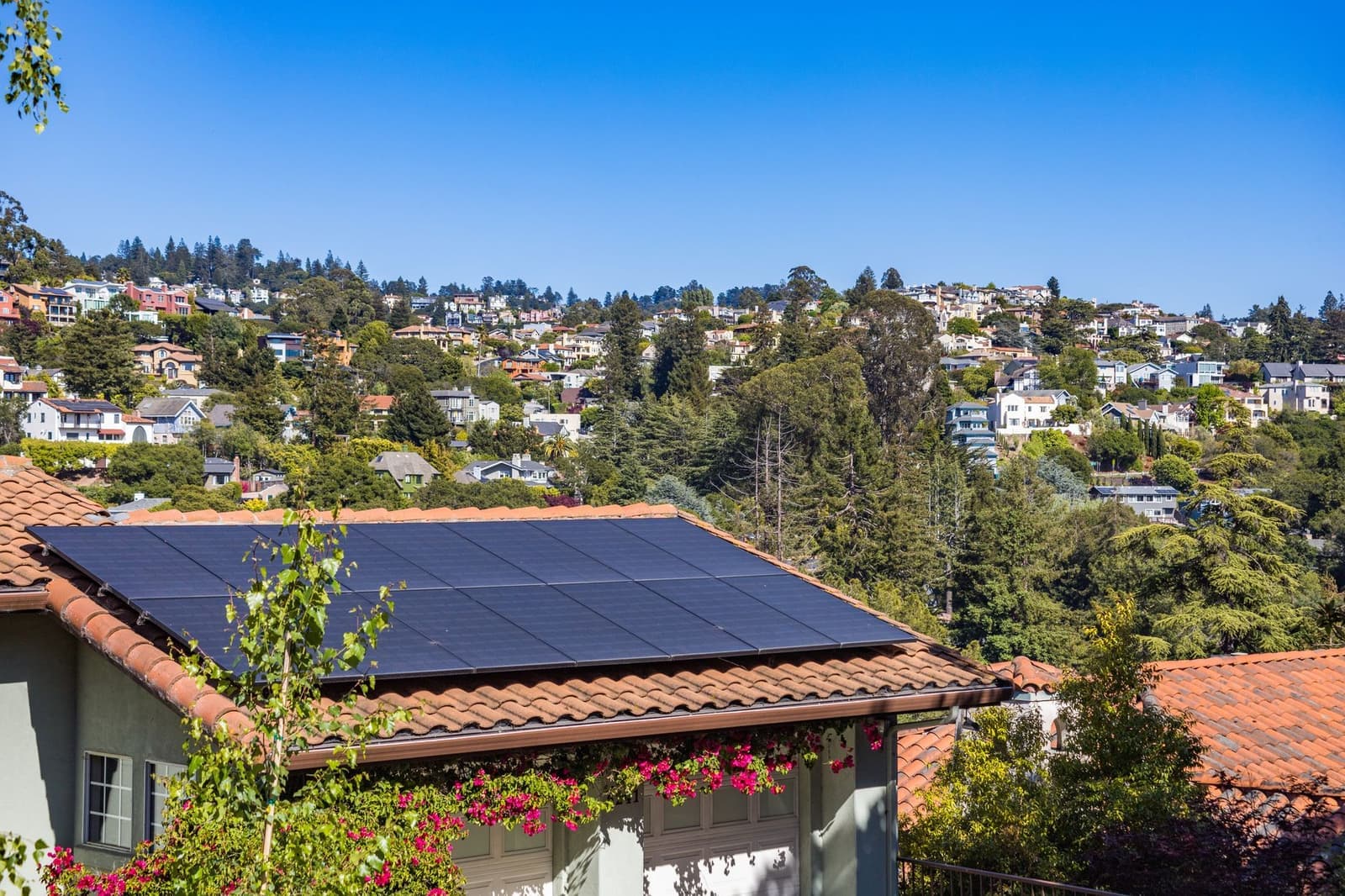
A roofing material is chosen against the structure below it, the fire class its zone calls for and the cool roof values its slope calls for.
The deck and the pitch come first
Every covering needs a solid, dry deck, a pitch that suits it and framing that can carry its weight. Low slopes need membranes. Steeper slopes take shingle, tile and metal.
The pitch is expressed as rise over run. Over 2:12 is steep slope for the City cool roof ordinance, and 2:12 or flatter is low slope.
A valley is the internal angle where two slopes meet. It carries the most water on a roof, so it has its own flashing detail: metal in an open valley, shingles woven or cut in a closed one.
Weight and framing
Weight sets the first limit. The City's express permit item for a reroof names Class A or B coverings under six pounds per square foot. A covering heavier than that follows a different route and often needs a structural check.
Tile is heavier than shingle, and the product data sheet gives the weight per square. Lightweight concrete tile is made for framing too light for the standard product. A roof of 25 pounds per square foot or more falls outside the steep-slope cool roof rule.
Switching from a light covering to a heavy one needs the framing checked before an order is placed.
The structural check is a small step compared with the cost of correcting framing after a heavy covering is installed. An engineer or the building office looks at rafter size, spacing and span against the load.
Fire class and cool values
Fire class belongs to a tested assembly. Los Angeles demands Class A in its Very High Fire Hazard Severity Zone and allows Class A or B in Fire District No. 1.
Cool values belong to the product. Shingles, tile, metal finishes and membranes are listed in the CRRC directory with aged reflectance and emittance. Once over half the roof is replaced, a steep slope in zone 4 or zones 8 through 15 must reach 0.20 and 0.75, or SRI 16.
The two properties are independent, so a Class A product may or may not be cool-rated, and vice versa.
Service life, and what to ask
How long does a new roof last? It depends on the covering, the underlayment and the details, and published figures vary widely. Ask the maker for the documented service life and read the terms of its warranty.
A better question is what fails first. On tile it is the underlayment. On shingle it is the granule surface. On metal it is a fastener or a seam. On a membrane it is a seam or a drain.
That tells you what to inspect over the years.
Warranty terms differ by maker and by whether a registration step is required. Read the paper before the order is placed.
Matching material to the house
The framing and deck may have been built for a lighter or heavier covering than the one on the roof now. The assessment reads that first.
Shingle suits most pitched roofs and moderate budgets. Tile suits framing built for it. Metal suits owners who want low weight and a Class A assembly. Membranes suit low slopes.
Changes of material can bring extra approvals, such as County planning approval for metal.
Ask whether the material is stocked locally. A product that must be ordered from far away sets the schedule.
Some material changes need their own approval. Where LA County is the building authority, a change to metal roofing needs sign-off from the Department of Regional Planning, separate from the building permit. Inside the City of Los Angeles, all wood shake and wood shingle covering is barred, and a modification request may allow only repairs of up to 5 percent. Separately, County rules require existing shakes to come off on a reroof. County rules also strip clay or concrete tile in full before any new material goes on, so a move away from tile starts from a bare deck, and the deck condition is known before the new covering is ordered.
Material questions
What is a valley on a roof called?
A valley is the internal angle where two roof slopes meet. It carries a lot of water, so it has its own flashing: metal in an open valley, and shingles woven or cut in a closed one.
How long does a new roof typically last?
It depends on the covering, the underlayment and the details. Ask the maker for its documented service life and read the warranty terms.
How heavy is tile compared with shingle?
Tile is heavier, and its data sheet gives the weight per square. The City's express reroof item names coverings under six pounds per square foot. Check the framing before changing material.